Frozen bags become fragile, and breakage can happen. While freezing bag breaks are rare, they typically occur in laboratories new to cryopreservation workflows. The solution comes down to understanding how materials behave at cryogenic temperatures and taking immediate protective measures.
Why Bags Break at Cryogenic Temperatures
When frozen below its glass transition temperature of approximately -60°C, EVA behaves like glass and can crack under sufficient force. Impact, crushing, or bending a frozen bag can cause breaks during freezing, storage, or thawing. The bag contents solidify and become rigid at liquid nitrogen temperatures, making them more prone to damage through impact.
The most common breakage scenario involves donor tubes. When the donor tube is sealed too long, it can act as a lever; any impact on the frozen tube can snap it off at the bag joint. This happens when bags slide within cassettes during handling or storage. Air left in bags creates another problem: nitrogen liquefies during storage, collects at the lowest area, then expands rapidly during rewarming while the bag is still brittle. This expansion can create localized pressure that cracks the bag.
Certain cell cultures and cryoprotectants expand during freezing due to water’s phase changes, some of which can expand dramatically, so it’s best that you check your institutional protocols.
The O-Wrap® Bag Solution
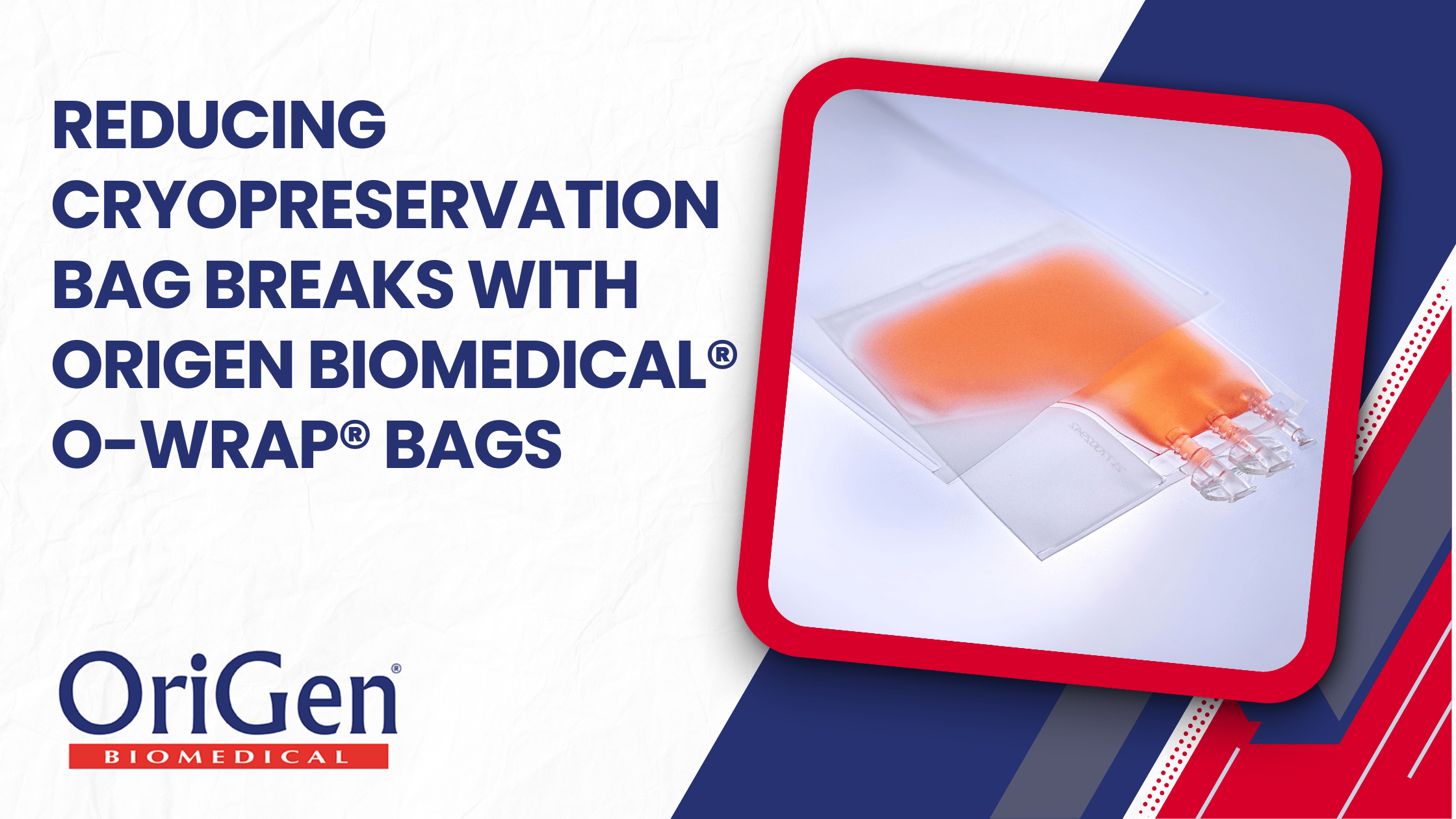
O-Wrap® Bags provide a protective barrier for CryoStore Freezing Bags and PermaLife® Cell Culture Bags during cryopreservation. The bags are constructed from an EVO copolymer developed specifically for direct liquid nitrogen immersion. This material maintains some flexibility at liquid nitrogen temperatures and withstands temperatures down to -196°C.
O-Wrap Bags combine durability with optical clarity. The translucent material allows inspection of contents even when frozen. The bags arrive as flat pouches sealed on three sides with one narrow end open, ready to receive the prepared cryobag.
Cassette Considerations
Cassette sizing matters. If the cassette is too tight or has corners that distort the bag, deformations in the freezing bag due to compression or pinching can cause breakage during freezing.. If the cassette is too large, frozen bags can slide and impact the metal walls. O-Wrap Bags help keep bags protected and positioned properly within cassettes.
Before freezing, the outside of the O-Wrap Bag and inside of the cassette should be dry; frost may cause the bag to adhere to the cassette. OriGen Biomedical instructions recommend using O-Wrap Bags inside freezing cassettes for storage.
Best Practices
Donor tubes should be sealed below spike ports and as close to the stub tube as possible. This short seal protects the frozen donor tube from potential impact if the bag shifts within the cassette. Cut – don’t pull – the seal apart after sealing.
Removing air before freezing prevents nitrogen-related issues. Different cell cultures and cryoprotectants behave differently, so maintaining consistency in processing protocols helps.
Handle frozen bags with care. Transporting frozen bags that are loose in rigid containers across facilities may increase breakage risk. Bag breaks that develop during freezing, storage, or thawing typically relate to impact when frozen or contents expanding below -40°C.
During thawing, observe the O-Wrap Bag carefully for swelling, which may indicate that liquid nitrogen seeped into the bag during storage. Migration of liquid nitrogen into bags can cause bursting during rewarming as nitrogen gasifies faster than it can escape through the bag walls.
Product Specifications
O-Wrap Bags are available in six sizes to accommodate different freezing bag configurations. Sizes range from 9 x 9 cm up to 24 x 36 cm and can be used with a variety of CryoStore Freezing Bags and PermaLife® Cell Culture Bags. The bags arrive sterile via gamma irradiation, supplied for single use in pouches of 5 or 10 units.
Each O-Wrap Bag includes a Certificate of Conformance and carries CE marking. OriGen Biomedical maintains ISO 13485:2016 and MDSAP certifications, with all products manufactured to GMP guidelines. The EVO copolymer material contains no phthalates, BPA, or latex.
Conclusion
The full white paper is available through our Client Dashboard, your hub for technical documents and best practices. For a closer look at the dashboard, its benefits, features, and tips for navigating this exclusive customer portal, visit our blog post Maximizing Your Access to Resources: A Guide to the Client Dashboard.